Salt is the single most important ingredient in your kitchen. Not olive oil, not garlic, not butter. Salt. A perfectly seasoned dish with mediocre ingredients will almost always taste better than a dish made with premium ingredients and timid seasoning. Professional chefs understand this instinctively. Home cooks, often taught to fear salt for health reasons, tend to underseason everything and then wonder why restaurant food tastes so much better.
But salt does far more than just "make things salty." It suppresses bitterness, enhances sweetness, amplifies aromas, changes the texture of proteins, controls fermentation, and fundamentally alters how your tongue perceives flavor. Understanding what salt actually does, not just that you should add it, will transform your cooking more than any technique or piece of equipment ever could.
This isn't a call to dump salt recklessly on everything. It's a guide to using salt with intention: knowing when to add it, how much to use, what type works best, and why the timing of your seasoning matters as much as the quantity.
The Chemistry of Why Salt Makes Food Taste Better
When sodium chloride dissolves on your tongue, the sodium ions interact with taste receptors in a way that amplifies other flavors already present in the food. Salt doesn't just add its own flavor. It acts as a flavor amplifier, turning up the volume on everything else.
The mechanism is surprisingly specific. Salt suppresses bitter compounds by interfering with the transduction pathway of bitter taste receptors. This is why a pinch of salt in coffee cuts the bitterness, why salting eggplant before cooking mellows its harsh edge, and why salted dark chocolate tastes richer than unsalted. The bitterness is still chemically present. Your tongue just can't detect it as strongly.
Simultaneously, salt enhances the perception of sweetness. Not by adding sugar, but by reducing the bitter compounds that were masking the sweet ones. This is why salted caramel works so well, why watermelon with salt tastes sweeter than without, and why a pinch of salt in cookie dough makes the sugar sing rather than just taste generically sweet.
Salt also enhances volatile aromatic compounds. The smells that account for roughly 80% of what we perceive as flavor. Research from the Monell Chemical Senses Center has shown that sodium ions increase the volatility of certain aroma molecules, literally making food smell more like itself. This is why properly seasoned tomato soup smells like tomatoes and underseasoned tomato soup smells like warm liquid.
The Threshold Effect
There's a critical concept that most home cooks miss: the difference between "salty" and "properly seasoned" is enormous. Food that's properly seasoned doesn't taste salty. It tastes vivid, balanced, and complete. Food that's underseasoned tastes flat, dull, and somehow incomplete even if you can't identify why. You only notice salt when there's too much or not enough. At the right level, it becomes invisible.
Professional kitchens typically season food to about 1-2% salt by weight. For a pound of ground beef, that's roughly 1.5 to 2 teaspoons of fine salt. For a pot of soup, it's about 1 teaspoon per quart. These numbers feel high to cooks who've been taught to add "a pinch". But taste the difference side by side and you'll never go back.
Types of Salt and When They Matter
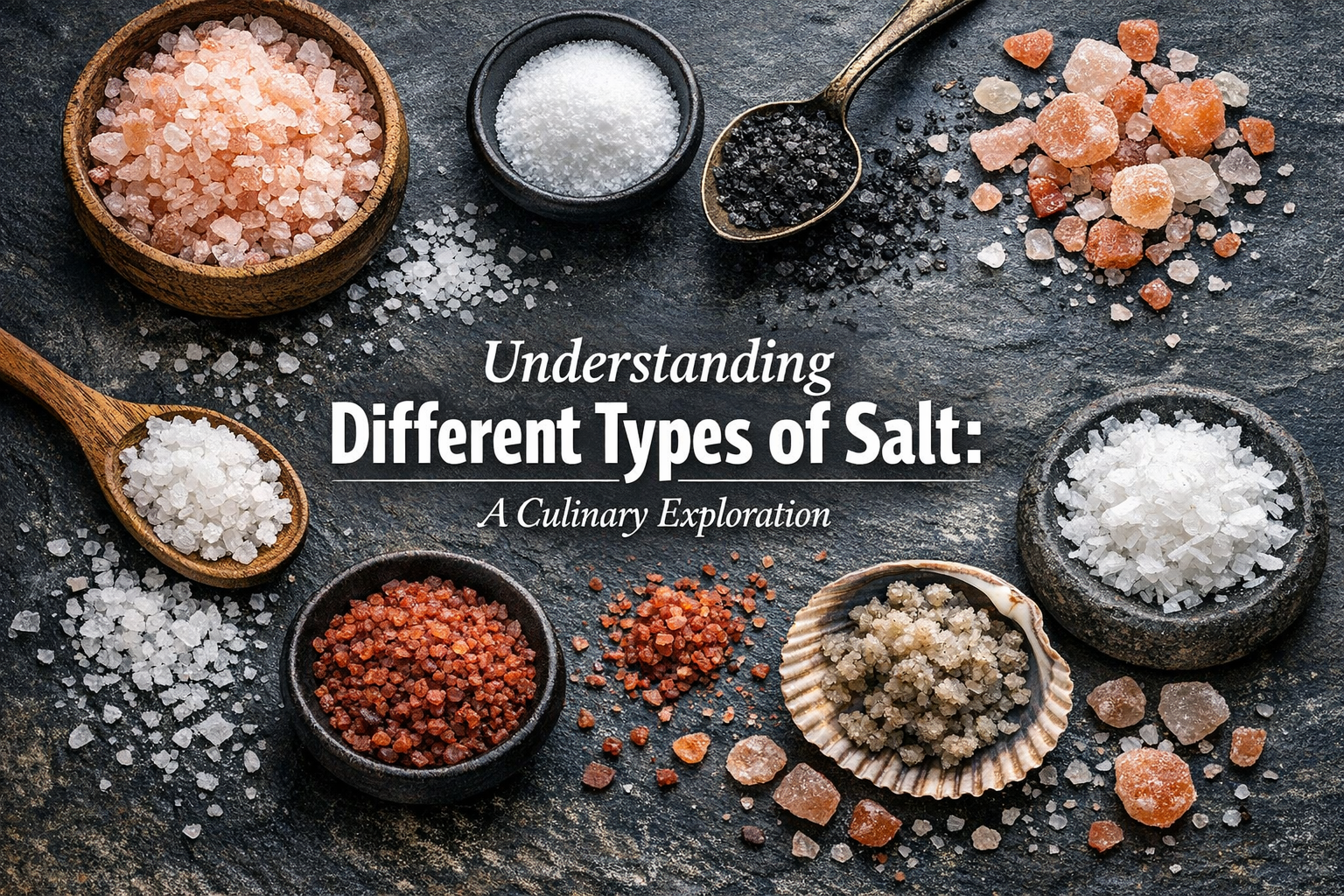
Not all salt is created equal, but the differences are more about texture and usage than flavor. Chemically, all cooking salt is sodium chloride. The variations that matter are crystal size, shape, and any trace minerals present.
Kosher Salt
This is the workhorse of professional kitchens for one reason: the large, flat crystals are easy to pinch and distribute evenly. You can feel exactly how much you're adding, which is nearly impossible with fine table salt that pours out in unpredictable clumps. The two major brands, Diamond Crystal and Morton's, are not interchangeable. Diamond Crystal has hollow, pyramid-shaped flakes that are about half as dense by volume as Morton's denser, rolled crystals. If a recipe calls for "1 teaspoon kosher salt" without specifying the brand, you need to know which one the recipe developer used, or you could end up with food that's twice as salty as intended.
By weight, they're identical. A gram of Diamond Crystal has the same saltiness as a gram of Morton's. This is why weighing salt, while admittedly obsessive, is the only truly accurate method. But for everyday cooking, just know your brand and adjust by taste.
Fine Sea Salt and Table Salt
Fine-grained salts dissolve quickly, making them ideal for baking (where even distribution matters and you can't taste-adjust) and for seasoning at the table. Table salt contains anti-caking agents and often iodine, which some cooks claim they can taste in large quantities. Fine sea salt skips both additives and works anywhere table salt does.
The iodine in table salt was added starting in the 1920s to prevent goiter, a thyroid condition caused by iodine deficiency. If you cook exclusively with kosher or sea salt and don't eat much processed food (which uses iodized salt), consider whether your diet provides enough iodine from other sources like seafood, dairy, or seaweed.
Flaky Finishing Salts
Maldon, fleur de sel, and similar flaky salts exist for one purpose: providing bursts of salinity and crunch as a finishing touch on completed dishes. Sprinkling Maldon over a chocolate chip cookie, a ripe tomato salad, or a piece of seared fish adds a textural element that no other salt provides. These crystals are too expensive and too large to use for cooking. They'd dissolve and waste their unique texture. Think of them as a condiment, not a cooking ingredient.
Pink, Black, and Smoked Salts
Himalayan pink salt gets its color from trace iron oxide. Black Hawaiian salt contains activated charcoal. Smoked salt is exactly what it sounds like. These specialty salts are fun and can add visual interest or subtle flavor notes as finishing salts, but their mineral content is too low to provide meaningful nutritional benefits despite marketing claims. Use them because they look beautiful on a steak, not because they'll cure anything.
When to Add Salt: Timing Changes Everything
The single most impactful thing you can learn about salt is that when you add it matters as much as how much you add. Early salting and late salting produce fundamentally different results.
Salting Early: Building Depth
When you salt onions at the start of a sauté, you're not just seasoning them. You're drawing moisture out through osmosis, which helps them soften faster and caramelize more deeply. Salt added to dried beans at the beginning of cooking (despite the old wives' tale) actually helps them cook more evenly by strengthening the cell walls so they don't burst. Harold McGee, the food science writer, debunked the "never salt beans early" myth decades ago, and Cook's Illustrated confirmed it with side-by-side tests: beans salted from the start had creamier interiors and intact skins.
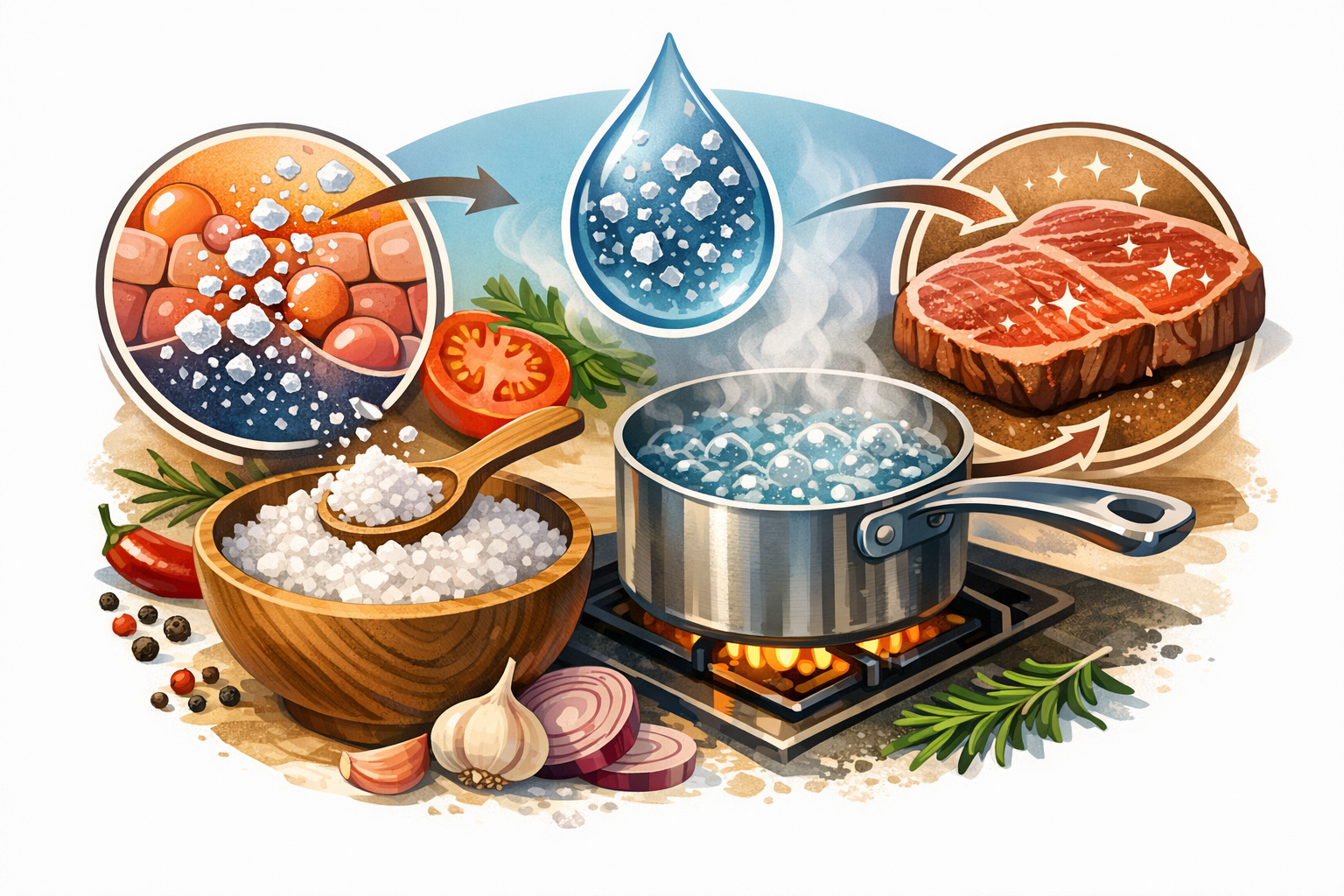
Salting meat well in advance, at least 45 minutes, ideally overnight, is one of the most transformative techniques in cooking. When you first apply salt to a steak, it draws moisture to the surface through osmosis. Over the next 30-40 minutes, that moisture dissolves the salt and is then reabsorbed back into the meat through diffusion, carrying the seasoning deep into the interior. A steak salted 24 hours before cooking will be seasoned all the way through, while one salted right before hitting the pan will only taste salty on the outermost surface.
This is why dry-brining, salting meat and leaving it uncovered in the refrigerator overnight, has largely replaced wet brining among serious cooks. You get the same deep seasoning and moisture retention without waterlogging the meat or diluting its flavor.
Salting Late: Brightness and Contrast
Finishing salt added just before serving provides bright pops of salinity that contrast with the more integrated seasoning beneath. This layered approach, salt during cooking for depth, salt at the end for brightness, is how professional kitchens achieve that "wow" factor.
Some ingredients should only be salted late. Mushrooms release their moisture quickly when salted, which prevents browning. If you want deeply caramelized mushrooms, cook them dry in a hot pan until golden, then season with salt afterward. Scrambled eggs salted too early can become watery and rubbery; salt them just before they finish cooking for the creamiest texture.
The Special Case of Pasta Water
Pasta water should taste like the sea. That's the standard line, and it's roughly accurate. For a large pot of water (about 6 quarts), you want approximately 2 tablespoons of kosher salt. This seems like a lot, but most of it goes down the drain. The pasta absorbs only a fraction, but that fraction seasons the noodle from within. Unsalted pasta tastes flat no matter how good your sauce is, because the seasoning sits on the surface rather than being part of the noodle itself.
The starchy, salty pasta water is also a crucial ingredient for finishing sauces. A ladleful of it added to your sauté pan helps emulsify olive oil into a silky sauce that clings to the pasta. This is the foundation of cacio e pepe, aglio e olio, and essentially every Italian pasta dish.
Salt and Protein: How Salt Changes Texture
Salt doesn't just flavor meat and fish. It physically restructures their proteins. When sodium and chloride ions penetrate muscle fibers, they cause the protein strands to unwind and swell, which increases the meat's ability to hold moisture during cooking. This is the science behind brining: a turkey that's been soaked in a 5-6% salt solution can retain 10-15% more moisture after roasting than an unbrined bird.
The same principle applies to ground meat. When you mix salt into burger patties and work the meat thoroughly, the dissolved proteins (primarily myosin) create a sticky, sausage-like bind. This is great for sausages, meatballs, and meatloaf, where you want a cohesive texture. It's terrible for burgers, where you want a loose, tender patty. The fix is simple: season the exterior of formed burger patties with salt right before cooking rather than mixing salt into the ground meat.
Fish responds to salt differently. Salting fish fillets 30-45 minutes before cooking firms up the flesh and reduces the albumin. That unappealing white protein that oozes out of salmon and cod during cooking. The salt denatures the surface proteins just enough to create a barrier that keeps the albumin contained. The result is a cleaner-looking, better-textured piece of fish.
Egg Proteins and Salt
Scrambled eggs are a perfect example of how salt timing affects protein behavior. Salt added to beaten eggs before cooking dissolves some of the egg proteins, weakening their ability to form tight bonds. This means the scrambled eggs set into softer, more tender curds with a creamier texture. The trade-off is that pre-salted eggs take slightly longer to set. Many chefs now recommend salting beaten eggs 15 minutes before cooking for the best balance of flavor and texture.
Common Seasoning Mistakes (And How to Fix Them)
Seasoning Only Once
The biggest mistake home cooks make is adding salt at a single point, usually at the end, and calling it done. Professional cooks season in layers: salt the onions when they go into the pan, salt the meat when it browns, salt the liquid when it's added, taste and adjust at the end. Each addition works differently, building a complex, well-integrated flavor that no single dose of salt can achieve.
Relying on Volume Instead of Taste
Recipes that say "1 teaspoon salt" are giving you a starting point, not a destination. The actual amount you need depends on the salt brand, the saltiness of your other ingredients (cheese, soy sauce, stock, cured meats), the volume of food, and your personal preference. The only reliable method is to taste as you go and adjust. Get in the habit of tasting your food at every stage of cooking.
Fear of Oversalting
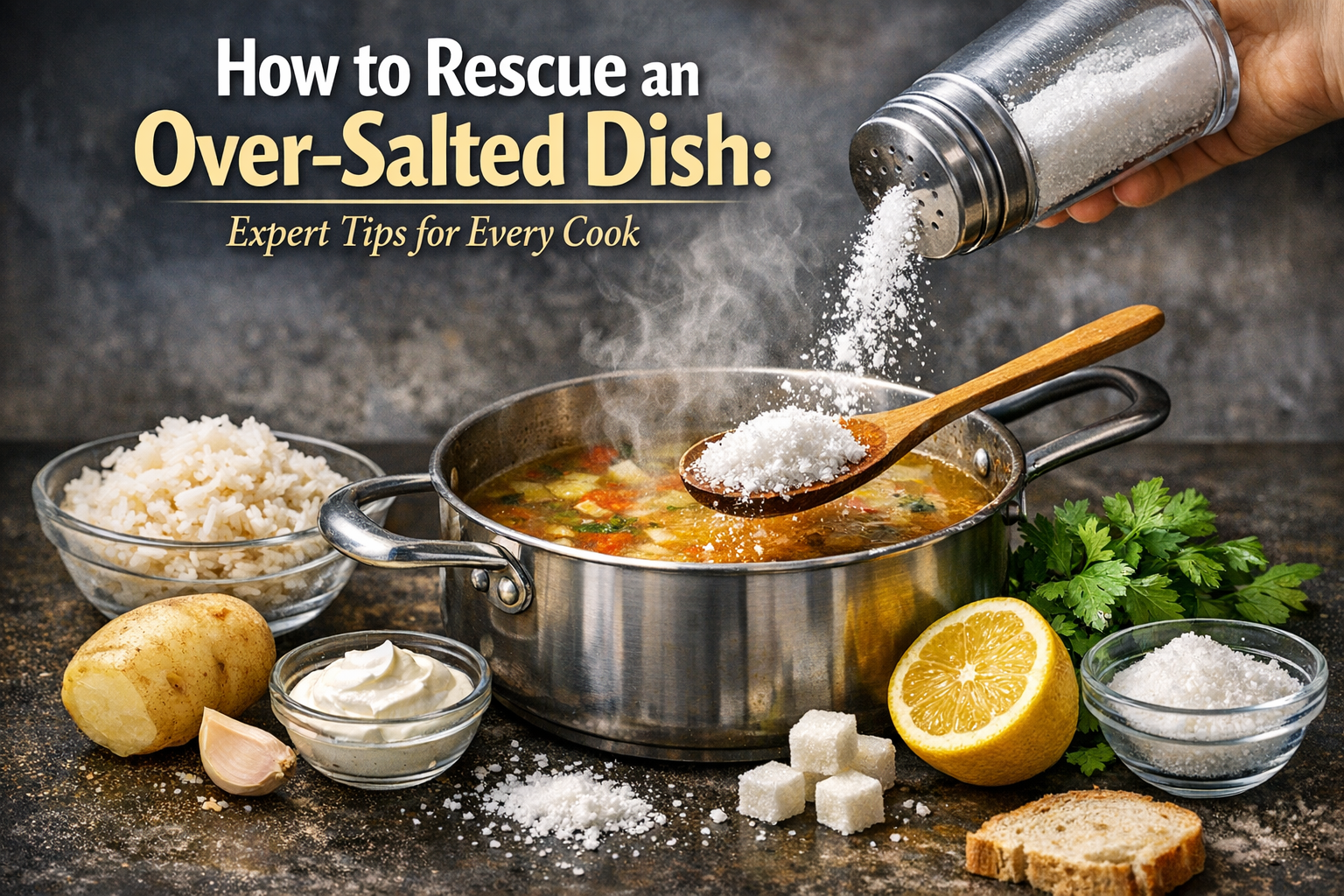
Most home cooks are so afraid of adding too much salt that they consistently add too little. Here's the reassuring truth: it's actually quite hard to oversalt food if you're tasting as you go. The jump from "needs more salt" to "too salty" is a bigger gap than you think. And if you do go too far, adding acid (lemon juice, vinegar) won't remove salt, but it will rebalance the flavor perception. Adding a starchy element, potatoes, rice, bread, to a too-salty soup or stew will absorb some of the excess.
Ignoring Salt in Sweet Dishes
Every pastry chef worth their apron knows that salt is as essential in desserts as it is in savory cooking. A chocolate cake without salt tastes monotonously sweet. A batch of caramel without salt is cloying. Even ice cream needs salt. It suppresses the perception of iciness and makes the sweetness taste rounder and more complex. If your baked goods taste "fine but not special," inadequate salt is usually the reason.
A Practical Approach to Better Seasoning
Improving your seasoning skills doesn't require measuring spoons or scientific knowledge. It requires two things: tasting your food more often and being willing to add more salt than feels comfortable at first.
Start by tasting everything before you serve it. Soup, pasta sauce, salad dressing, marinades. Taste them. Ask yourself: does this taste vivid and complete, or flat and one-dimensional? If it's flat, add a small pinch of salt, stir, and taste again. Repeat until the flavors pop. You'll develop a sense for the right level surprisingly quickly.
Keep a dish of kosher salt next to your stove so you can pinch and season with your fingers. This gives you far more control than shaking salt from a container. Feel how much you're adding. With practice, you'll be able to season a pot of soup by pinch alone, the same way a professional cook does.
Salt is the foundation that everything else in your cooking builds upon. Master it, and every other ingredient you use will taste better because of it.